Last updated 2026-08-21
TL;DR
Bounce house rental is short-term hire of a commercial inflatable plus delivery and setup. Start with an EIN, amusement insurance, and a call to your state ride office before you buy vinyl. Many states treat inflatables as amusement rides. Confirm permits, inspections, and fees with the board that actually regulates you.
What is bounce house rental?
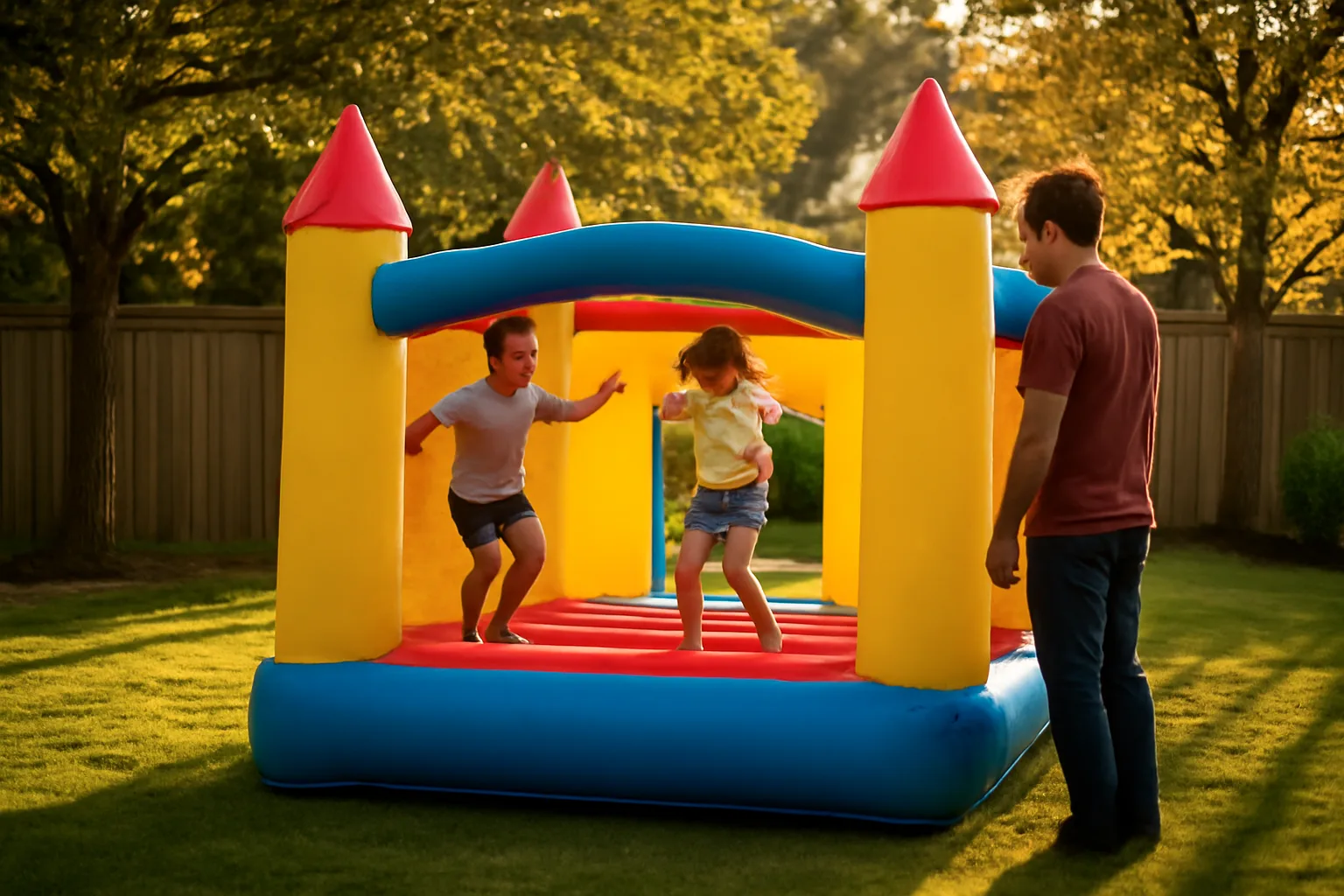
Bounce house rental is the short-term hire of a commercial inflatable amusement device. You deliver it, anchor it, inflate it, and either stay as an attendant or leave it under a written drop-off agreement, then you take it back. The customer pays for a set window of use, usually a few hours on a single site.
That is the whole product. It is equipment rental plus a field service. It is not a retail toy sale, and it is not a carnival ticket booth.
Most first-year operators own one to four units, run Friday through Sunday, and store the vinyl in a garage or a small warehouse. Schools, churches, city rec desks, and backyard birthdays make up the book. Wet units and long obstacle courses come later, if they come at all.
People mix this up with party stores that only broker someone else's inventory. If you do not own or lease the unit, you do not control the blower, the stakes, the patch kit, or the claim file. That is a referral play. Call it that.
Regulators care because kids get hurt on these things. An estimated 64,657 children younger than 18 were treated in U.S. emergency departments for bounce house related injuries from 1995 to 2010, according to Pediatrics. [1] The same paper reported the annual count rose from 1,251 injuries in 1995 to 17,878 in 2010. [1] That is why your insurer asks ugly questions, and why some states fold commercial inflatables into amusement-ride law.
A typical paid outing is a few hours on site plus drive time and a same-day or next-morning pickup. Weekends carry most of the cash. Weekdays are schools and rec contracts if you chase them. The work looks simple from the street. The paper is the job.
How do you start bounce house rental?
You start bounce house rental by lining up the paper, then the insurance, then the first commercial unit. Do not buy a castle and figure out licenses later. That sequence is how people get a cease-and-desist from a ride office or a denial letter from a carrier after the first claim.
Here is the order I would actually use.
Get an Employer Identification Number from the IRS if you do not already have one. The online EIN application is the federal starting point for a business that will open a bank account and sit on an insurance policy. [6] Decide sole prop versus LLC with a CPA or a business lawyer in your state. The SBA register-your-business walkthrough maps the usual federal and state stack. It is a map, not a permit. [8]
Call two or three amusement-device insurers before you spend money on vinyl. If they will not quote you for portable inflatables, stop. Ask whether they require ASTM F2374 operating practices, attendant rules, photo logs, and a written weather shutdown. Then call the state office that inspects amusement rides. That office may sit in agriculture, labor, or insurance. Ask a blunt question: do portable inflatables need an annual permit or registration here?
Florida is not shy. Florida Statute 616.242 states, "An amusement ride may not be operated without an annual permit." [3] Texas ties lawful operation to a yearly insurer inspection and a current policy under Occupations Code chapter 2151. [4] New York runs covered devices under Industrial Code Rule 45. [11] Pennsylvania registers amusement rides under 7 Pa. Code chapter 139. [12] Some states have no inflatable program at the state level, which means city hall and your carrier still get a vote. Confirm with the relevant board. Do not trust a Facebook group for that answer.
Only then buy one commercial jumper (used is fine if you can see the manufacturer plate and the repair history), a blower that matches the unit, stakes and ballast, a small generator if sites lack power, and a trailer your current driver license covers. Write a contract that names supervision rules, weather, damage, and who must be listed as additional insured. A national checklist will not replace the phone call to your ride board.
Do you need a license to rent bounce houses?
Often yes, but the license is rarely a single national card. You may need a state amusement-ride permit, a city business license, a home-occupation approval, park-use permits, and a sales-tax account. Which of those apply is a local fact. Confirm every form with the board that issues it.
There is no federal bounce house operator license. The U.S. Consumer Product Safety Commission publishes injury work and safety information on inflatable amusement devices. It does not hand you a permit to rent them. [2] States and cities do that.
Use this as a field guide, then verify. Fees and processing times change. I will not invent them.
| Place | Who usually holds the paper | What you confirm |
|---|---|---|
| Florida | FDACS under s. 616.242 | Whether your inflatable is an amusement ride and the current annual permit package [3] |
| Texas | Occupations Code ch. 2151 / TDI ride rules | Yearly inspection certificate and the insurance minimum for your ride class [4] |
| New York | NYS DOL Code Rule 45 | Device classification and inspection cycle [11] |
| Pennsylvania | PDA, 7 Pa. Code ch. 139 | Registration and who may inspect [12] |
| States with no inflatable program | City or county | Business license, park COI rules, fire and zoning |
If a clerk says inflatables are unregulated, ask the insurance desk the same question. Carriers regulate you even when a state ride office does not. I would not open a weekend book on a verbal "you're fine" from one counter.
Park jobs add a second layer. Rec departments almost always want a certificate of insurance that names the city as additional insured, plus wording on your waiver that their attorney already likes. Get that sample COI before you advertise "we do city parks."
What insurance do bounce house rental companies need?
You need a commercial general liability policy that expressly covers inflatable amusement devices, plus auto coverage that matches how you tow, and (if you have help) workers' compensation as your state requires. A homeowners policy and a personal auto policy will not do this job. Expect the carrier to ask for ASTM practices, training logs, and weather rules.
Texas is a clean example of how a state can write insurance into the operating rule itself. Occupations Code chapter 2151 says a person may not operate an amusement ride unless that person has a current qualifying insurance policy and a yearly inspection certificate tied to that coverage. [4] Your state may not copy Texas. Your underwriter still might.
I would buy the policy, or at least hold a written quote bindable on a named unit, before the trailer leaves the seller's lot. Paying a month of premium on an empty calendar is cheaper than owning vinyl you cannot legally put in a yard.
Ask four ugly questions on the call. Are bounce houses, slides, and combos scheduled or blanket? Is there an attendant warranty (meaning a claim dies if you were supposed to stay and you left)? What wind speed voids the policy? Does the extra insured endorsement actually go onto city and HOA certificates without a weekly fight?
Skip cheap "event" policies that only cover one date unless you truly do one date. Skip any agent who has never placed an inflatable. If you are weighing this trade against a W-2 nearby, read bounce house rental vs a nearby career before you cancel health coverage you already understand.
What safety rules apply to commercial inflatables?
Commercial inflatables sit under manufacturer manuals, ASTM F2374, your insurer's warranties, and (in many states) amusement-ride statutes. The strictest written rule wins on the job site. CPSC staff reviewed inflatable amusement devices as a consumer product category because emergency-department injuries kept showing up in the data. [2]
ASTM F2374 is the standard practice for design, manufacture, operation, and maintenance of inflatable amusement devices. [9] It is not a free pamphlet you skim once. States and carriers point to it because it is the industry document that actually talks about anchoring, wind, capacity, and maintenance in one place. I would buy the current edition and keep a printed copy in the truck. If you want a one-time paper pack that maps ASTM language next to a weather call sheet, InflatablePath sells a $149 ASTM + Weather Kit. Use it as a checklist. It does not replace the standard or your state ride office.
Pediatrics put the injury pattern in plain numbers. "The number of bounce house, related injuries increased from 1251 in 1995 to 17 878 in 2010." [1] That sentence is why attendants, age grouping, and no-flips rules belong in the contract, not in a text message after someone gets hurt.
On the grass, the non-negotiables are boring. Stake or ballast to the manual, not to whatever fits in the trunk. Measure the overhead lines. Keep blowers dry and caged. Separate big kids from toddlers. Shut down when the wind or lightning says so. Photograph the setup, the stakes, and the sky. Those photos are for the claim you hope you never file.
Call 811 before you drive long stakes into a yard you do not know. The federal 811 program exists so you do not punch a utility line for a birthday party. [14]
How much cash do you need in year one?
Nobody publishes a clean national P&L for bounce house rental, so anyone quoting a single startup number is guessing. Plan cash for the first commercial unit and blower, a legal trailer and tiedowns, deposits on insurance, entity and tax accounts, stakes and ballast, a generator, patches, and enough fuel and ads to reach the first paid weekends. Get current invoices. Do not budget off a blog from 2019.
I would start with one good used jumper from an operator you can call, not three no-name units from a marketplace listing with no manufacturer plate. A second identical blower is a better year-one buy than a wet/dry combo you cannot staff. Apps, logo wraps, and a custom website are easy ways to light money on fire before you have repeat customers.
Hold a cash reserve for the claim deductible, a ruined generator, and a month where three Saturdays wash out. Weather is not a side issue in this trade. It is a revenue line.
If you want a feel for how other writeups frame the same startup stack, the sibling notes in bounce house rental guide 12 and bounce house rental guide 24 are useful as comparison reading. They are not your state's rulebook.
IRS Publication 583 is the federal explainer on records you should open on day one: what you spent, what you took in, and how you will prove it. [7] Publication 334 is the small-business tax guide most sole props actually need on the shelf. [5] Neither publication will price your castle.
What paper should you keep from day one?
Keep a job file that would still make sense if you were in a deposition. That means the signed contract, the customer ID notes, the COI sent to the site, setup photos, wind checks, incident forms, and the invoice. IRS Publication 583 tells small operators to keep records that document income, expenses, and the basis of assets. [7] Amusement work adds safety paper on top of tax paper.
I keep (and you should keep) a unit log. Hours of inflation. Repairs. Seam checks. Blower serials. Anchor counts. When a carrier or a state inspector asks how you maintain the device, a notebook beats a memory.
Waivers help. They do not make you bulletproof. A waiver that contradicts your state's amusement statute or your insurer's warranty is clutter. Have a lawyer in your state read one page. Do not paste a free form from another operator in another state.
If you hire anyone, add I-9s, W-4s, and the child-labor analysis before you hand a teenager a blower cord. Federal non-farm child labor rules still apply to a Saturday crew. Hazardous-job limits and hour limits are real. Read WHD Fact Sheet 43 and then your state labor office. [13]
Sales-tax exemption certificates from schools and churches belong in the same folder as the invoice. If you cannot find the certificate later, you may owe the tax. Confirm the rule with your state department of revenue. I will not invent a rate.
How should you price a bounce house rental?
Price off your true cost per outing and the real local book, not a national average someone tweeted. Add fuel, labor hours, wear, payment fees, the insurance allocation, and a weather-risk cushion. Then look at three local competitors on the same weekend and decide if you want the job.
I would not race to the bottom on a 4-in-1 combo just to fill a Saturday. Cheap jobs still need stakes, a blower, and a claim-ready file. They just pay you less to carry the same risk.
Write the clock in the quote. Delivery window, inflation, paid play time, deflation, pickup. People argue about the hour you left, not the hour you arrived. Put a generator fee in writing if the yard has no outlet. Put stairs, long carries, and second-story decks in writing or refuse them.
Deposits should be large enough that a Friday-night cancel hurts the customer more than you. Spell out weather. Spell out what "high wind" means in your shop, and point to the shutdown number in the manufacturer manual and your policy.
If you are still comparing how different guides talk about rate cards, bounce house rental guide 36 and bounce house rental guide 48 are next-click comparison pieces. Your market still sets the number.
What happens when the weather turns?
You shut down. You do not "see if it holds." Wind and lightning turn a jumper into a sail or a wet electrical problem. The National Weather Service treats high wind as a public safety issue and tells people to secure loose outdoor objects and respect wind warnings. [10] Your manual and your policy will be stricter than a general weather page, and those documents control the job.
Put the call in the contract. Who decides. What time the decision locks. Whether you reschedule, issue a rain check, or keep a setup fee if you already rolled a crew. I keep a larger deposit on spring weekends for this reason. Three washed-out Saturdays will wreck a thin year.
Lightning means you pull kids off and kill power. Rain on a dry-only unit means you stop, not that you "watch the seams." Wet/dry units still have blower and electrical limits. Follow the plate on the machine.
I would rather refund a deposit than explain a rollover. That is not bravery. That is remaining in business. Photograph the sky and save the forecast screenshot in the job file so the Monday-morning argument has evidence.
Can you run bounce house rental from home?
Sometimes. Zoning, HOA rules, and your insurer decide, not a national blog. A vinyl bag in a garage is one thing. A trailer, a generator, and Saturday morning engine noise is another. Ask planning and zoning, then ask the HOA in writing. Confirm. Do not assume a home-occupation permit covers customer pickup of inflatables.
Neighbors complain about trailers first. If the covenant bans commercial vehicles, you will lose that fight. A cheap storage unit near the highway is often calmer than a war with the people who share your fence.
Watch the driveway math. You still need room to dry vinyl. Moldy towers do not get re-rented, and they do not pass a serious inspection. Drying is part of the facility, even if the facility is a patio and two box fans.
For a wider set of comparison writeups on the same operating questions, bounce house rental guide 60 and bounce house rental guide 72 sit in the same cluster.
What taxes hit bounce house rental income?
Federal income tax, self-employment tax if you are not a W-2 shop, and (in many states) sales tax on the rental of tangible personal property. Employment taxes appear the day you have employees. Confirm each account with the IRS and your state department of revenue. I will not invent a rate or a filing calendar.
IRS Publication 334 is the small-business tax guide for sole proprietors, including how profit hits the 1040 and how self-employment tax works. [5] Get an EIN even if you are a one-person shop. Banks and carriers want it, and the IRS online application is built for that. [6]
Sales tax is the one new operators miss. A weekend jumper is often taxed like equipment rental, not like a nontaxable service. Some states split delivery from the rental. Some treat the whole invoice as taxable. A school certificate may zero the tax if you keep the paper. Ask revenue, not a competitor.
Open a separate account. Pay yourself on purpose. Mix personal grocery charges into the business card and you will hate April. Publication 583 is blunt about why records exist: so you can report, and so you can prove the report. [7]
What equipment is worth buying first?
Buy one commercial-grade jumper with a readable manufacturer plate, a matching blower, spare tubes, real stakes, ballast bags, a GFCI, and a trailer you can legally tow. That is the first kit. Everything else is optional until that kit is booked and insured.
Skip the giant water park as unit one. It needs more crew, more water, more lawn damage arguments, and a pickier underwriter. Skip no-name vinyl with no manual. If you cannot name the standard the unit was built to, your inspector and your carrier can refuse it.
A second blower is not glamorous. It saves Saturday. So does a patch kit you have actually practiced with. So does a torque method for stakes that matches the soil you really see, not the soil in the catalog photo.
When you want a single start page that points at the paper path, use /start. InflatablePath is an independent publisher, not a law firm and not a rental company. For another angle on the same comparison set, bounce house rental guide 18 and bounce house rental guide 30 are easy next reads. Your state board still has the last word on permits.
Frequently asked questions
What is bounce house rental?
It is short-term hire of a commercial inflatable amusement device plus delivery, anchoring, and inflation. You charge for a set play window, then you take the unit back. It is equipment rental and a field service, not a toy sale. Many states treat the commercial unit as an amusement ride. Confirm that status with your ride office before you advertise.
How do you start bounce house rental?
Get an EIN, choose an entity with local advice, and call amusement insurers before you buy vinyl. Then ask your state ride office whether portable inflatables need a permit or inspection. Florida, Texas, New York, and Pennsylvania are examples of states with ride paper. Buy one commercial jumper, write a real contract, and open tax accounts. Confirm every fee with the issuing board.
Do I need a special state license for inflatables?
Many states fold commercial inflatables into amusement-ride law. Florida requires an annual permit to operate an amusement ride. Texas requires qualifying insurance and a yearly inspection certificate. New York uses Code Rule 45. Pennsylvania uses 7 Pa. Code chapter 139. Other states leave it to cities. Confirm with the relevant board. Do not invent a national card.
Can I use a homeowners policy to rent bounce houses?
No. You need commercial general liability that names inflatable amusement devices, plus auto coverage that matches the trailer, and workers' compensation if you have employees. Homeowners and personal auto policies are built for private use. A claim on a paid rental will expose that gap. Get a written quote from an amusement-device market before the first job.
Is ASTM F2374 required?
ASTM F2374 is the industry standard practice for design, manufacture, operation, and maintenance of inflatable amusement devices. States and insurers often point to it even when they do not sell you the document. I would operate to the current edition and the manufacturer manual. Buy the standard. Do not guess at wind or anchor counts from memory.
How many bounce houses should I buy first?
One commercial jumper is enough to learn the paper, the Saturday clock, and your real insurance bill. A matching spare blower beats a second novelty unit. Used is fine if the plate, manual, and repair history are real. Three cheap no-name castles create three claim surfaces and still one inexperienced operator.
Do I charge sales tax on a bounce house rental?
Often yes, because many states tax the rental of tangible personal property. Some split delivery from the rental charge. Schools and churches may be exempt if you keep a valid certificate. This is state revenue law, not a vibe. Confirm the taxable base and the current rate with your department of revenue before you print invoices.
Can teenagers work the crew?
Sometimes, inside federal and state child-labor limits. Hour caps, night limits, and hazardous-job rules still apply to a weekend inflatable crew. Driving, certain power equipment, and too-long Saturday shifts are where operators get sloppy. Read DOL WHD Fact Sheet 43 and then your state labor office before you put a minor on the blower.
What wind speed shuts down a bounce house?
Follow the manufacturer manual, ASTM F2374 practice, and your insurer warranty. Use the strictest number. A general weather page is not your shutdown rule. The National Weather Service warns the public about high wind, but your plate and policy control the job. Put the call, the time lock, and the refund math in the contract.
Do I need to call 811 before staking a yard?
Yes if you are driving long stakes into ground you do not know. The federal 811 program exists so excavators and anyone else putting tools in the dirt do not hit buried utilities. A birthday party is not an excuse to punch a gas or electric line. Private lines past the meter may still be on you. Ask the homeowner and mark what you can see.
Can I store units at home?
Only if zoning, the HOA, and your insurer allow commercial storage and a trailer. Get that in writing. Neighbors complain about noise and commercial vehicles long before they complain about vinyl bags. If the covenant is ugly, rent a small storage bay and dry units on a schedule. Mold is a business-ending problem, not a cosmetic one.
Are backyard big-box inflatables legal to rent?
Treat them as a no. Commercial carriers and state ride offices look for manufacturer plates, commercial fabric, and manuals that match ASTM-style operation. A retail backyard unit is built for private use. If you cannot show a commercial pedigree, expect a refused quote or a failed inspection. Buy commercial vinyl or stay out of the trade.
Sources
- American Academy of Pediatrics, Pediatrics (2012), Pediatric Injuries Associated With Inflatable Bounce Houses: Estimated 64,657 U.S. ED visits for pediatric bounce house injuries from 1995 to 2010, rising from 1,251 in 1995 to 17,878 in 2010
- U.S. CPSC news release, CPSC Staff Report: Inflatable Amusement Devices (2015): CPSC staff issued a dedicated report on inflatable amusement devices because of injury patterns in that product category
- Florida Statute 616.242 (2023), Safety standards for amusement rides: Florida law states an amusement ride may not be operated without an annual permit
- Texas Occupations Code Chapter 2151, Regulation of Amusement Rides: Texas requires qualifying insurance and a yearly safety inspection certificate to operate an amusement ride
- IRS Publication 334, Tax Guide for Small Business: Federal small-business tax rules for sole proprietors, including how profit and self-employment tax are reported
- IRS, Apply for an Employer Identification Number (EIN) Online: The IRS issues EINs through an online application used to identify a business for tax, banking, and insurance setup
- IRS Publication 583, Starting a Business and Keeping Records: Federal guidance that new businesses should keep records documenting income, expenses, and asset basis
- U.S. Small Business Administration, Register your business: SBA walkthrough of the usual federal and state registration steps when launching a business
- ASTM International, F2374 Standard Practice for Inflatable Amusement Devices: ASTM F2374 is the standard practice for design, manufacture, operation, and maintenance of inflatable amusement devices
- National Weather Service, Wind Safety: NWS treats high wind as a public safety hazard and advises securing loose outdoor objects
- Pennsylvania Code, 7 Pa. Code Chapter 139 Amusement Rides and Attractions Erected Permanently or Temporarily: Pennsylvania registers and regulates amusement rides under 7 Pa. Code chapter 139
- U.S. DOL Wage and Hour Division, Fact Sheet 43: Child Labor Rules for Nonagricultural Occupations: Federal non-farm child labor hour limits and hazardous-occupation rules apply to minor employees
- PHMSA, Call 811 Before You Dig: The federal 811 program exists so people disturbing the ground can have buried utilities marked first